
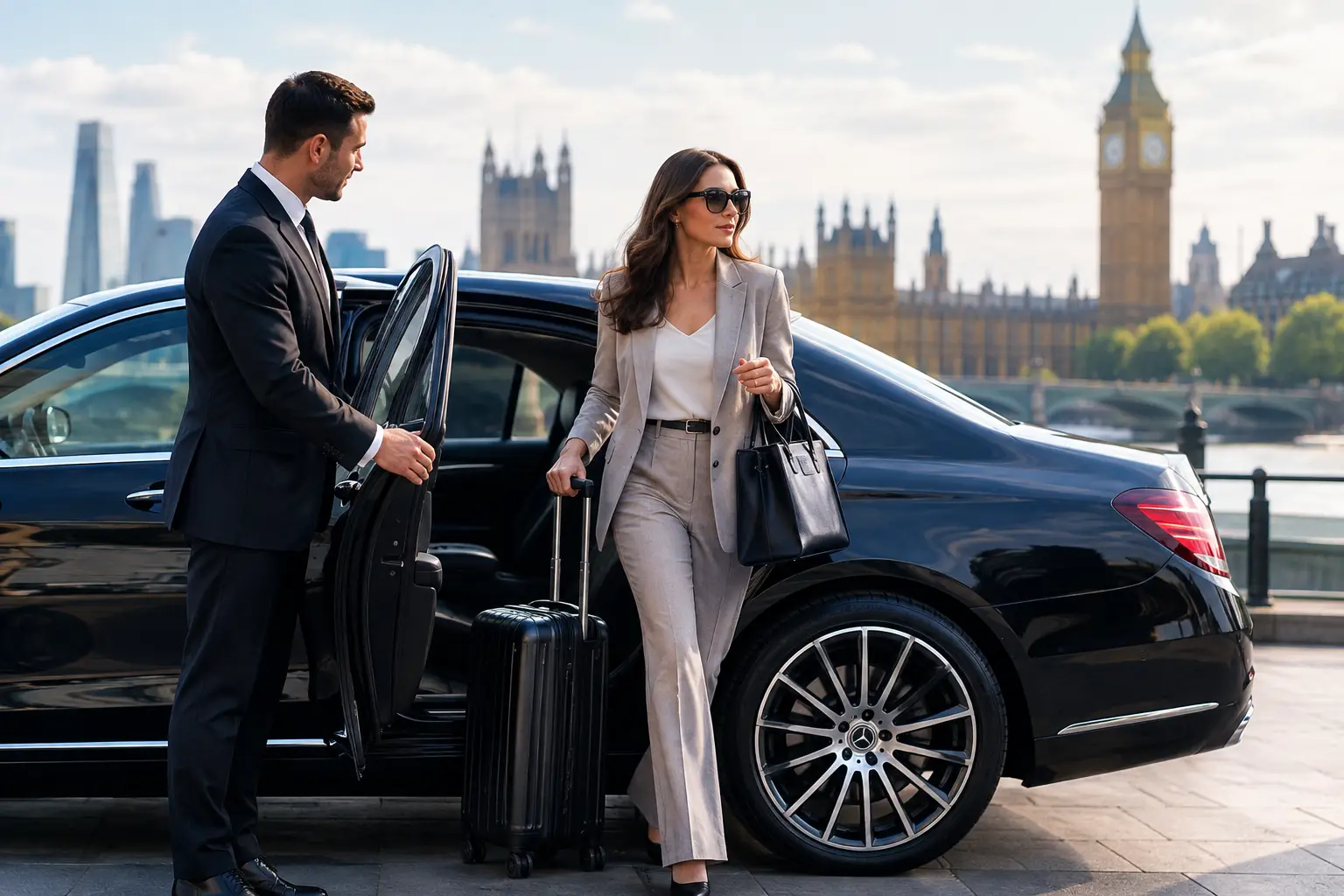
A delayed evening flight into Manchester, a client meeting in Liverpool at 8am, and a laptop bag full of work is where business travel trends become real. For professionals and travel managers, the journey is no longer a background detail. It affects whether people arrive composed, prepared and on time - or frustrated before the working day has properly begun.
The strongest shift is simple: business travellers expect transport to work around their schedule, not the other way round. That means reliable door-to-door journeys, clear communication when plans change and enough space to work, rest or speak privately between appointments.
Business travel trends are becoming more practical
For years, business travel was often judged by price alone. That has changed. Cost still matters, particularly for companies managing frequent journeys, but value now includes punctuality, traveller wellbeing, flexibility and the confidence that a booking will be handled properly at 4am as readily as 4pm.
The most valuable travel arrangements remove avoidable decisions. A professional should not be comparing last-minute fares on several apps while leaving a meeting, wondering whether a vehicle will be large enough for colleagues and luggage, or trying to explain a changing flight arrival time to a different driver each time.
This is why pre-booked private transport continues to appeal to corporate travellers across Liverpool, the North West and the wider UK. A fixed quotation makes budgeting straightforward. A named local provider offers accountability. A comfortable vehicle gives passengers a chance to use travelling time well.
Time is now treated as a business cost
A lower fare can become expensive if it introduces uncertainty. Missing a train, arriving late for a pitch or losing an hour to an unreliable collection has a cost that rarely appears on an invoice.
More businesses are therefore looking beyond the cheapest available journey. They are choosing transport that protects the diary: collection times planned around the actual appointment, sensible contingency for traffic, flight monitoring for airport arrivals and a driver who understands the route and the local area.
That does not mean every journey requires a chauffeur-driven executive vehicle. A short trip between offices may only need a dependable private-hire car. For an airport run, a client collection or a day with several meetings, the extra comfort and certainty can be the better decision. The right level of service depends on who is travelling, what is at stake and how much luggage, equipment or time pressure is involved.
Flexible itineraries need dependable ground transport
Business schedules are less predictable than they once were. Hybrid working has reduced some routine commuting, yet it has made many face-to-face meetings more intentional. When teams do travel, they may need to cover several locations in one day, meet colleagues arriving on different services, or adapt quickly after a meeting runs over.
Ground transport needs to reflect that reality. Hourly chauffeur hire, for example, can suit a visitor with back-to-back appointments better than arranging separate journeys throughout the day. The vehicle and driver remain available, allowing the schedule to move without repeated bookings and uncertain waiting times.
Airport travel is another clear example. Flights can land early, arrive late or be diverted. A service that monitors flight status and adjusts collection arrangements provides practical reassurance, especially after a long working day or an international trip. The passenger should not have to negotiate their way through an unfamiliar airport car park while managing calls, luggage and delays.
For Oakmont Executive Travel, this is the difference between simply providing a car and managing the journey. The quote is the fare, with no hidden extras, and the booking is planned around the passenger rather than an algorithm’s nearest available vehicle.
Comfort is part of professional performance
The expectation of comfort is not just about luxury. It is about arriving ready to work. A quiet, clean vehicle with room to sit properly can give a passenger time to make a call, review notes, answer messages or take a breath before a presentation.
For small groups, vehicle choice matters even more. Sending four, five or six colleagues in separate cars creates extra coordination, repeated waiting and the risk of people arriving at different times. A spacious seven-seat Mercedes-Benz V Class can keep a team together while allowing for luggage and work bags. Features such as Wi-Fi, refreshments and entertainment are useful on longer journeys, but the main benefit is a calm, private environment that supports the purpose of the trip.
There is a balance to strike. Not every organisation needs premium transport for every mile, and responsible travel policies should avoid unnecessary spend. However, treating executive travel as a considered tool rather than a perk can be sensible when it protects a client relationship, supports a senior visitor or keeps a group on schedule.
Safety and duty of care are moving up the agenda
Business travel no longer ends when a meeting finishes. Employers are paying closer attention to how colleagues get home after late events, early flights and long-distance journeys. This is particularly relevant when trains are limited, venues are outside city centres or a passenger is unfamiliar with the area.
A pre-booked, licenced and insured service gives travellers a clear plan. DBS-checked drivers, confirmed collection details and direct contact with a local team can provide more confidence than hoping for availability at the end of the night.
Duty of care also applies to visitors. If a client, candidate or colleague is arriving in Liverpool for the first time, their onward journey shapes their first impression. A polite driver, a suitable vehicle and a prompt collection say that their time has been respected. That matters whether the passenger is travelling to a board meeting, conference, hotel, rail station or cruise terminal.
Sustainable choices need to be realistic
Environmental concerns are influencing business travel decisions, although the practical answer varies. Video calls have replaced some journeys that once happened by default. Rail is often preferred for city-centre routes. Teams are also combining several meetings into one trip rather than travelling repeatedly.
Yet fewer journeys do not remove the need for reliable road transport. They make each journey more significant. A well-planned private transfer can reduce unnecessary car use around a trip by collecting several colleagues together, linking rail travel with the final destination, or avoiding separate airport parking and collection arrangements.
The most sustainable option is not always identical for every itinerary. A direct shared vehicle may make more sense for a group with equipment and a tight schedule, while rail plus a pre-booked station transfer may suit a solo traveller heading to a city-centre meeting. The key is to plan the complete route rather than judging one part of it in isolation.
The return of the managed travel experience
One of the clearest business travel trends is a move away from fragmented arrangements. Professionals are tired of having one system for rail, another for flights, an app for local cars and no obvious support when something goes wrong. They want a travel experience that feels joined up, even when the itinerary is not.
For transport providers, that means being responsive before the journey as well as during it. It means confirming the details clearly, selecting the right vehicle, accommodating luggage and group numbers, and staying contactable if plans change. It also means offering transparent fares rather than leaving a passenger to discover a higher total after the journey.
Companies arranging regular travel can benefit from building a relationship with one trusted provider. Preferences can be understood, recurring routes become easier to organise and the person making the booking has someone to contact when a last-minute change needs a practical answer.
The best business journeys do not demand attention. They leave passengers at the door, on time, with the space and confidence to focus on what they travelled for.