
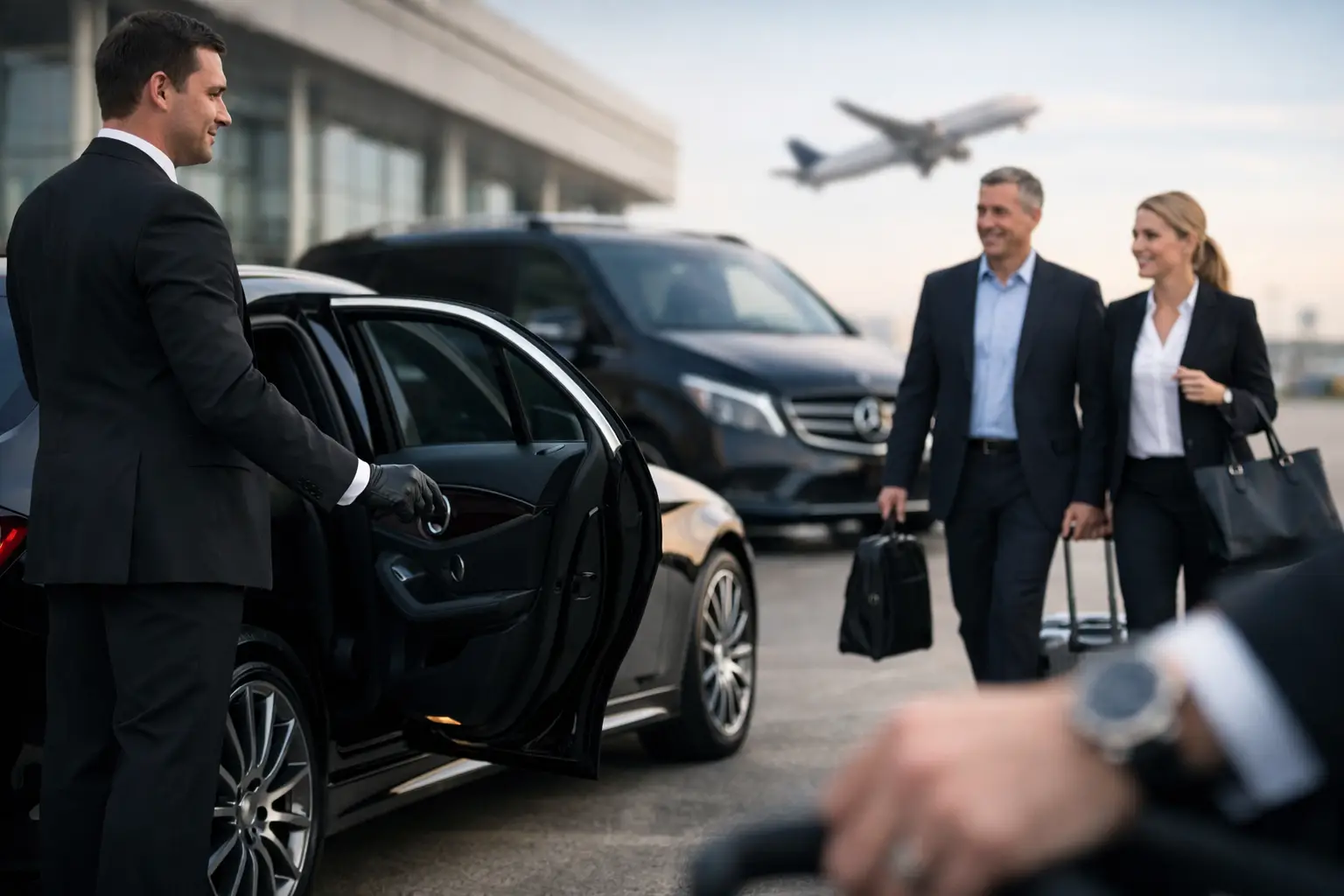
A roadshow can involve a breakfast briefing in Liverpool, a client presentation in Manchester and an evening meeting in Leeds, all with little room for delay. Corporate roadshow transport gives your team a controlled, comfortable way to move between each appointment, rather than leaving important timings to separate taxi bookings, rail connections or unfamiliar drivers.
For finance teams, sales leaders, advisers and visiting executives, transport is not simply a practical detail. It affects whether people arrive prepared, whether equipment stays with the group and whether clients see a business that is organised from the first handshake. The right travel plan keeps the working day moving while allowing passengers to focus on the conversations that matter.
Why corporate roadshow transport needs planning
A corporate roadshow runs to a different rhythm from a single airport transfer. There may be multiple pick-ups, changing addresses, short waiting periods and a schedule that develops as meetings overrun or finish early. One missed connection can place the rest of the day under pressure.
Pre-booked private-hire transport gives one team responsibility for the journey. Your itinerary is considered before the first pick-up, including collection times, venue access, passenger numbers, luggage and the space needed between appointments. A professional driver can then work to the agreed plan while responding sensibly when the day changes.
This is particularly valuable where senior colleagues, clients or guests are travelling together. Instead of arriving separately with different updates and uncertain arrival times, the group can travel door to door in one vehicle. It is more efficient, and it creates a calmer start to each meeting.
Choosing the right vehicle for your roadshow
The vehicle should suit the people and the work involved, not just the number of seats. A compact executive car may be appropriate for one or two passengers travelling light. For teams, presentation materials and hand luggage, a premium people carrier is usually the more practical choice.
The Mercedes-Benz V Class is well suited to corporate roadshow transport for up to seven passengers. It offers generous room for colleagues and luggage, allowing everyone to travel together without the cramped feel of a standard taxi. Comfortable seating, Wi-Fi, refreshments and onboard entertainment also make longer motorway stretches more useful and more relaxing.
Not every itinerary calls for the same set-up. A board member travelling from Liverpool to London may value quiet space before a presentation, while a sales team heading to several North West venues may need seating for the full group and storage for display materials. If a larger party needs more than one vehicle, journeys should be coordinated as one movement, with clear timings and a shared point of contact.
Build the itinerary around real meeting times
The best plans allow for the realities surrounding a meeting, not only the time printed in a calendar invite. Consider venue check-in, security, parking restrictions, time required to unload equipment and the fact that city-centre addresses can take longer to reach at peak times.
A useful itinerary includes each collection point, the name and full address of every venue, the meeting start and expected finish time, passenger names and a mobile contact. It should also identify which stops are fixed and where there is flexibility. That gives the driver enough information to make sensible decisions without repeatedly interrupting the travelling team.
Allowing a realistic buffer does not mean wasting time. It protects the appointments that cannot move. For a pitch, investor meeting or senior client visit, arriving ten or fifteen minutes early is usually preferable to asking a roomful of people to wait because traffic was heavier than expected.
If your roadshow starts or finishes with a flight, share the flight details when booking. Flight monitoring helps a driver plan around an early arrival or delay, and removes the pressure of trying to arrange onward travel while walking through the terminal.
Account for waiting time honestly
Roadshow schedules often contain uncertainty. A meeting may last forty minutes or two hours, depending on the discussion. Hourly chauffeur hire can be a sensible option when a driver needs to remain available between several stops, particularly where the team must leave promptly once a meeting ends.
For a more predictable route, a fixed quotation for the agreed journey may offer better value and simpler budgeting. The choice depends on how tightly defined the day is. A clear transport provider will explain what is included before you travel, rather than adding ambiguity once the work is complete.
Fixed fares make expense planning easier
Corporate travel should not create a surprise on the expense sheet. App-based taxis can be convenient for an isolated short trip, but surge pricing, cancellations and changing driver availability are poor fits for a time-critical programme.
With a pre-booked fixed fare, the quote is the fare. Your organiser and finance team know the cost before the itinerary begins, with no hidden extras caused by fluctuating demand. Where the schedule includes waiting time, additional stops or a late finish, these details can be discussed at the quotation stage so the arrangement reflects the actual day.
That clarity matters for both one-off events and regular client visits. It makes approval easier, gives managers a reliable basis for budgeting and avoids asking travellers to spend their time chasing receipts from several different journeys.
Professional drivers protect the passenger experience
The driver represents part of the experience your guests receive. A licensed, DBS-checked and insured private-hire driver brings the reassurance that matters when colleagues, clients or visitors are in the vehicle. They understand that discretion, punctuality and a courteous welcome are not optional extras.
Local knowledge remains useful even with satellite navigation. A driver familiar with Liverpool and the wider North West can anticipate busy routes, event-day congestion, restricted streets and practical drop-off points. For longer trips across mainland UK, route planning and well-timed stops help keep passengers comfortable without losing control of the schedule.
Professionalism also means respecting the atmosphere in the vehicle. Some passengers will want to make calls, review notes or simply have a quiet moment before their next meeting. Others may use the journey to discuss the presentation ahead. A well-run chauffeur service gives people the space to do either.
Keep communication simple on the day
One nominated organiser should be able to contact the transport provider directly if an address changes, a passenger is delayed or a meeting moves. Equally, the driver needs a reliable number for the person leading the group. This avoids mixed messages being passed through several colleagues.
Before departure, confirm the collection time, vehicle details, passenger count and key stops. During a multi-stop day, brief updates are usually enough. The goal is not to fill everyone’s phone with travel messages, but to ensure the right person has a clear answer when plans change.
Oakmont Executive Travel provides a direct, local service for corporate journeys across Liverpool, the North West and mainland UK, with bookings planned around the people and places involved. That personal approach is especially useful when a roadshow involves more than a straightforward A-to-B journey.
When group travel is better than separate bookings
There are occasions when separate cars are necessary, such as guests arriving from different locations or a group too large for one vehicle. Even then, coordinated multi-vehicle travel is preferable to leaving individuals to make their own arrangements. Vehicles can be scheduled to arrive together, with the same destination information and a single organiser overseeing the plan.
Where possible, keeping colleagues in one vehicle has clear advantages. It reduces the risk of someone going to the wrong entrance, allows documents and equipment to remain together, and gives the team a private window to prepare. It can also be more cost-effective than several ad hoc bookings, although this depends on passenger numbers, mileage and waiting requirements.
A better start to every appointment
Roadshow transport works best when it is treated as part of the event plan, not an afterthought booked between meetings. Share the full itinerary, choose a vehicle with room to work and travel comfortably, and agree a transparent fare before the day begins.
When your next programme includes several meetings, client visits or airport connections, arrange the transport early enough for the timings to be properly considered. That leaves your team free to arrive composed, prepared and ready to give each appointment their full attention.