
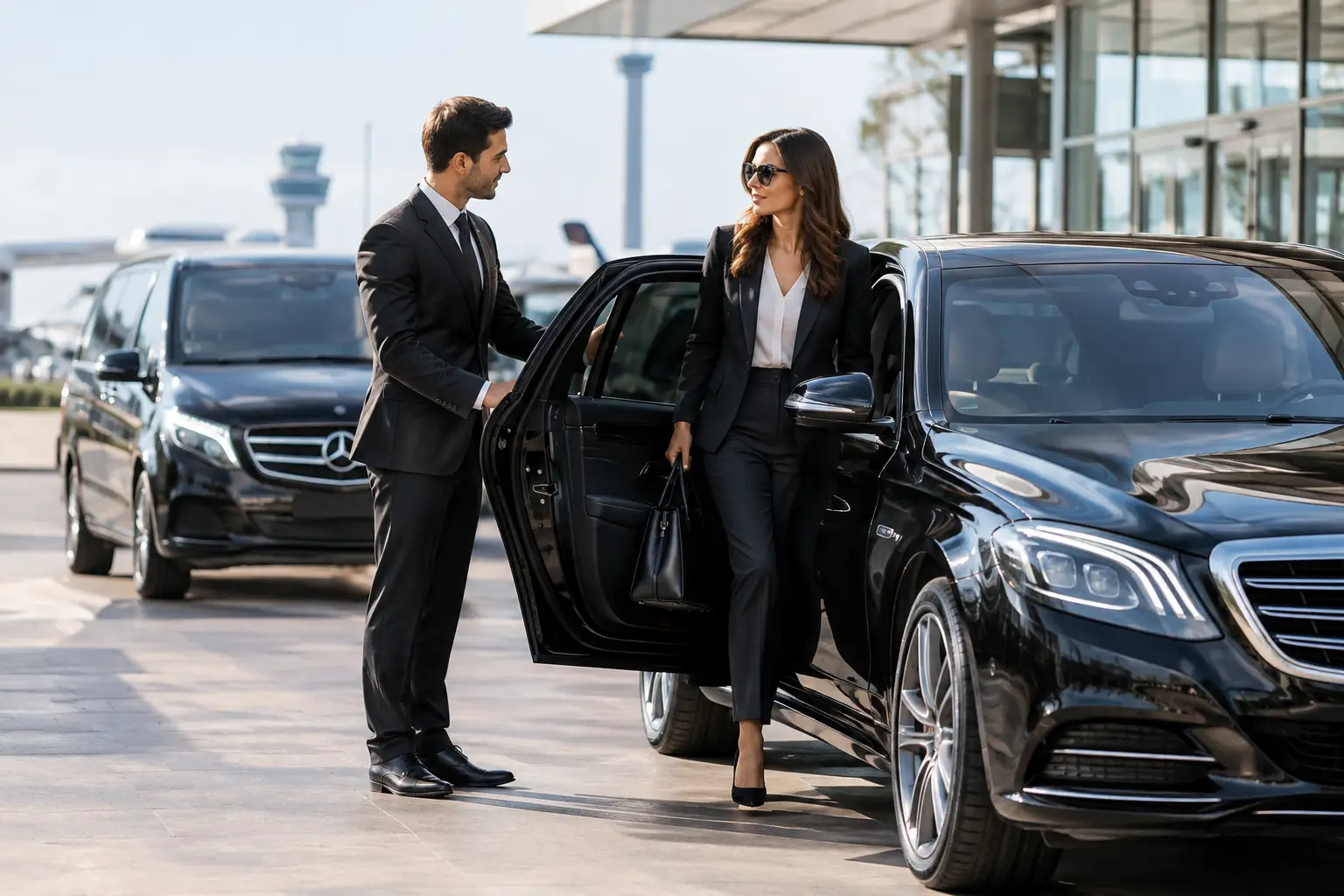
A visiting director left standing outside Liverpool Lime Street, a client circling an unfamiliar airport pick-up area, or a team arriving in separate taxis can change the tone of a business day before the first meeting begins. To manage corporate arrivals properly, transport needs to be planned as part of the itinerary, not treated as a last-minute task.
For businesses welcoming clients, colleagues and senior visitors across Liverpool and the North West, the standard is simple: the right vehicle, in the right place, at the right time, with no uncertainty around the fare. That requires more than booking the nearest available car.
Start with the arrival, not the journey
Corporate ground transport is often arranged around the departure point: which airport, which station, which hotel. The more useful starting point is what happens after the passenger steps out of the vehicle. Are they heading directly into a board meeting? Do they need ten minutes to make a call or check notes? Is a colleague meeting them in reception? Will the journey include luggage, presentation materials or several members of the same team?
These details determine the right collection time, vehicle and route. A guest travelling alone with hand luggage may need a discreet executive transfer. A visiting team arriving for a site visit may need a seven-seat vehicle or coordinated cars, with enough room for cases and equipment. When the itinerary is built around the arrival itself, there is less rushing, fewer messages between departments and a stronger first impression.
Build realistic time into the schedule
A flight landing at 09:00 does not mean the passenger will be ready to leave at 09:00. Allow for disembarkation, passport control where relevant, baggage reclaim and the walk to the agreed meeting point. Rail arrivals can also vary, particularly when connections or platform changes are involved.
For a high-stakes meeting, a sensible buffer is part of good planning, not wasted time. It gives the traveller room to deal with a delayed bag, a final call or a change in plans without making the host wait. The exact allowance depends on the airport, time of day and whether the passenger has checked luggage, but assuming the best-case scenario is rarely a sound corporate policy.
Use flight monitoring for airport arrivals
Flight numbers should be supplied when arranging an airport collection. This lets the transport provider follow the live arrival time rather than relying solely on the original timetable. If a flight is early, delayed or diverted, the collection can be adjusted around what is actually happening.
This is particularly valuable for executives travelling through Liverpool John Lennon Airport, Manchester Airport or airports further afield. A driver who knows the flight status can time their approach and remain ready for the passenger, rather than asking a tired traveller to chase the car after landing.
Flight monitoring does not remove every variable. Long waits at passport control and baggage delays can still occur. That is why clear communication matters too. A good arrangement gives the traveller a direct point of contact and clear collection instructions before they leave. They should know who is meeting them, where to go and what vehicle to expect.
Choose a vehicle that protects comfort and credibility
The cheapest available option is not always the most efficient option. A cramped car for a passenger with luggage, or two separate vehicles for colleagues who need to prepare together, can create friction at the very moment the visit should feel organised.
Vehicle choice should reflect passenger numbers, luggage, journey length and the purpose of the trip. For small executive groups, a Mercedes-Benz V Class offers space for up to seven passengers while keeping everyone together. It gives guests room to settle in, make calls, review plans or simply decompress after a flight. Features such as Wi-Fi, refreshments and onboard entertainment are useful on longer transfers, but the main benefit is practical: a comfortable, private environment that respects people’s time.
There is a trade-off. A larger premium vehicle may cost more than a standard saloon, and multiple cars may be necessary for a large delegation. Yet splitting a group can lead to staggered arrivals, missed conversations and unnecessary coordination. For client-facing days, keeping key people together is often worth the investment.
Keep the fare clear before anyone travels
Corporate travel budgets are easier to control when the price is agreed in advance. Fixed-price quotations allow the organiser to know the cost before confirming the booking, without surge pricing or unexpected changes caused by demand.
This clarity is useful for finance teams as well as travellers. It reduces the need to reconcile variable app fares, receipts and unexplained waiting charges after the event. The quote is the fare, with no hidden extras, provided the agreed journey and requirements remain the same.
If the itinerary includes several stops, a wait-and-return arrangement or an hourly chauffeur booking, confirm this at the outset. A detailed brief produces an accurate quotation and prevents assumptions on the day. Include collection and destination addresses, flight or train details, passenger numbers, luggage, timing, contact names and any accessibility requirements.
Give travellers one clear point of contact
The person booking the journey is not always the person travelling. That simple fact causes many avoidable arrival issues. A traveller may not know the collection point, while the driver may have only the booker’s number. If the flight changes or the meeting moves, messages can become delayed or confused.
Share the essential booking details with both the traveller and the host: collection instructions, driver contact arrangements, vehicle description, destination and the name of the person waiting at the other end. For larger visits, nominate one organiser who can approve changes quickly.
A direct, local provider is particularly helpful here. Instead of navigating an automated support route, the organiser can speak to a team that understands the booking and can respond to a changed terminal, delayed train or revised meeting time. Oakmont Executive Travel operates around the clock, giving corporate travellers a dependable option for early departures, late arrivals and schedules that do not fit office hours.
Plan for the arrivals that do not go to plan
The most effective corporate travel plans include a response to disruption. Flights can be delayed, meetings can overrun and a last-minute passenger may be added to the booking. The aim is not to predict every problem. It is to work with a provider that has enough information to act calmly when one occurs.
For recurring business travel, create a simple arrival brief that can be reused by your team. It should record preferred pick-up points, company billing details, usual passenger requirements and escalation contacts. Keep it flexible rather than overly rigid. A visitor travelling alone may prefer a discreet saloon, while the same company’s project team may require a V Class and additional vehicles the following week.
Safety belongs in that plan as well. Licensed, insured vehicles and DBS-checked drivers give employers and travellers confidence, especially for evening arrivals, unfamiliar cities and lone travellers. Professionalism is not only about a clean vehicle or smart presentation. It is about knowing that the person behind the wheel is accountable and prepared.
Make the final mile part of the welcome
The last few miles set the mood for the meeting ahead. A reliable driver can select a sensible route, handle luggage and deliver a passenger to the correct entrance rather than simply the nearest postcode. For hotels, offices, conference venues and private residences, that door-to-door attention removes one more thing from the traveller’s mind.
Hosts can improve the experience by making the handover equally clear. Tell reception who is arriving, reserve parking where possible and ensure the guest knows whether to ask for a named contact. If the visit is especially significant, meet them at the entrance. The transport may be complete, but the welcome is not.
Corporate arrivals work best when they feel unremarkable to the person travelling: no fare surprises, no unanswered calls, no uncertainty about where to stand. Put the right details in place before the journey, and your guests can arrive calm, prepared and ready to focus on the reason they came.