
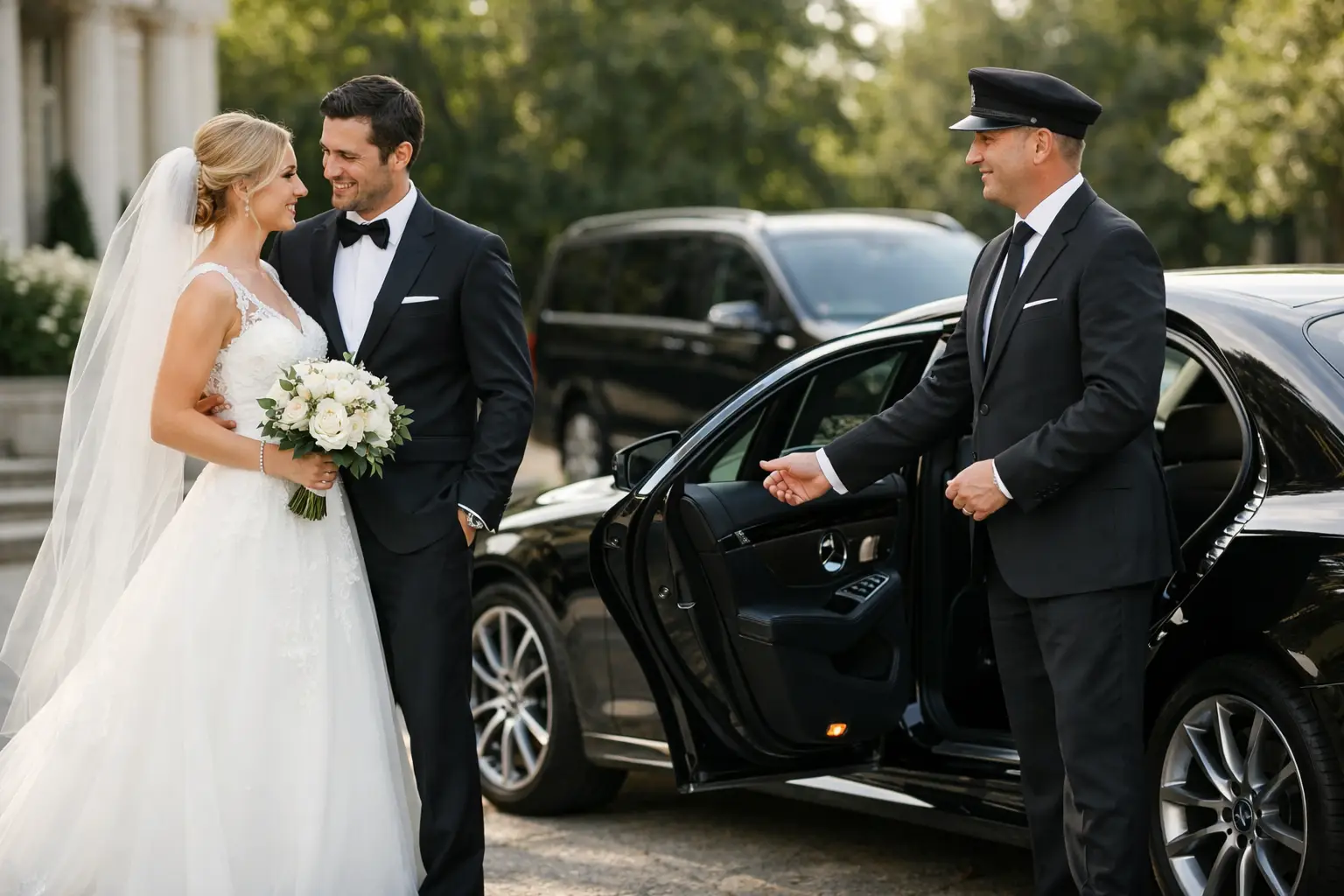
A wedding timetable can look beautifully simple on paper: ceremony at 1pm, photographs at 2pm, wedding breakfast at 4pm. The pressure arrives in the gaps. A delayed car, a guest without a lift, or a vehicle too small for a dress and luggage can throw the whole day off course. To plan stress-free wedding transport, treat every journey as part of the celebration, not an arrangement to settle at the last minute.
For couples in Liverpool and across the North West, the best plan is built around certainty. That means knowing who travels together, when each vehicle must arrive, how long each route actually takes, and what happens if the day runs a little later than expected. Premium transport should remove decisions from your wedding morning, leaving you free to enjoy it.
Start with the journeys, not the vehicles
Before choosing a car, map out the journeys your day requires. Most weddings involve more than the bridal party getting from A to B. There may be parents travelling separately, a groom and groomsmen heading to the venue, guests arriving from a hotel, and a newly married couple leaving for the reception or hotel at the end of the night.
Write down each collection point, destination, passenger number and required arrival time. Then work backwards. If the ceremony begins at 1pm, the people making the entrance should not be booked to arrive at 1pm. Build in time for traffic, photographs outside the venue, checking in with the registrar, and the inevitable final details.
For the couple, aim to arrive 20 to 30 minutes before the ceremony where practical. For close family and the wedding party, 15 to 20 minutes is usually sensible. Guests travelling from a hotel should have a clear collection time and a named meeting point, rather than an instruction to find their own way.
Plan stress-free wedding transport around the people who matter
Not every guest needs a chauffeur-driven journey, but certain people will benefit enormously from one. Grandparents, anyone with limited mobility, guests unfamiliar with the area, and friends who will be enjoying a drink at the reception should not be left to manage uncertain taxi availability or late public transport.
A planned return service is particularly valuable for an evening reception. The last hour of a wedding is rarely predictable. Some guests leave early, others stay until the final song, and the couple may want a quiet, comfortable journey to their hotel once the celebrations finish. Pre-arranged transport means nobody has to stand outside refreshing an app or nominate an already tired family member to drive.
If several guests are travelling from the same place, group transport can be both more practical and more sociable than multiple separate cars. A seven-seat Mercedes-Benz V Class, for example, gives a family or wedding party room to travel together, with space for bags, outfits and the things that accumulate on a wedding day. It also avoids the familiar problem of splitting a group between vehicles and waiting for one party to catch up.
Choose capacity with dresses, luggage and comfort in mind
Passenger numbers alone do not tell you what vehicle you need. A formal dress can take up considerably more room than a standard seat, particularly if it has a wide skirt or train. Bridesmaids may have garment bags, hair and make-up kits, bouquets and overnight luggage. Groomsmen can bring suits, gifts and personal bags. If transport is also taking you to a hotel or airport afterwards, luggage becomes even more relevant.
Discuss the practical details when booking. A professional provider can recommend whether one larger vehicle, separate cars or coordinated multi-vehicle transport is the better option. It depends on the size of the wedding party, the dress, the distance between venues and whether anyone needs to travel with equipment, mobility aids or luggage.
Comfort is not an indulgence on this occasion. The journey to a ceremony can be one of the few calm moments in an otherwise busy morning. Air-conditioned space, refreshments and room to sit comfortably can make a genuine difference. For a wedding party, onboard Wi-Fi and entertainment can also keep younger passengers happy between venues, although the focus should remain on a relaxed and unhurried atmosphere.
Do not underestimate the importance of a clean, calm cabin
Your transport will appear in photographs, but its main job is to look after the people inside it. Choose a well-presented, insured vehicle with a professional licensed driver who understands that your clothing, timings and privacy matter. A clean cabin, careful driving and help with doors and luggage are small details that set the tone from the first collection.
Use a fixed quote to protect the wedding budget
Weddings involve enough moving costs without wondering what a journey will cost after it has happened. App-based taxi prices can change with demand, weather, time of day and local events. That uncertainty is especially unhelpful when you are booking several journeys or arranging travel for family members.
A fixed-price quotation gives you a clear figure to include in your budget. The quote should be the fare, with no hidden extras appearing because the collection is early, the reception finishes late, or traffic is slower than expected. Ask what is included, how waiting time is handled, and whether the provider can accommodate a revised itinerary if your venue schedule changes.
The least expensive option is not always the best value. A cheap car that arrives late, lacks space or cannot take the whole group may create far more cost and stress on the day. For wedding transport, value comes from reliability, comfort, safety and a provider who can respond when plans change.
Give your driver a proper wedding-day brief
A booking confirmation should do more than show an address and time. Share the full itinerary with your transport provider several days before the wedding, including postcodes, venue names, collection contact numbers, passenger names and any access instructions. Historic venues, city-centre hotels and rural locations can have one-way systems, narrow entrances or restricted drop-off points.
Let the driver know if there are young children, elderly passengers, a large dress, photographs planned on arrival, or a surprise departure that needs discretion. If the reception venue has a different entrance for private-hire vehicles, confirm that in advance.
It is useful to nominate one person other than the couple as the transport contact. This might be a parent, best man, maid of honour or wedding coordinator. They can answer a quick call about a collection without interrupting the couple during hair, make-up, photographs or the ceremony itself.
Build sensible contingency into the timings
No one wants to plan for disruption, but a good wedding plan allows for it quietly. Check for major football fixtures, concerts, roadworks, city-centre closures and seasonal traffic when setting your route. Liverpool and the wider North West can be particularly busy around match days and large events.
Avoid scheduling every vehicle to arrive at the same minute. Stagger collections where possible and leave a buffer between ceremony, photographs and reception travel. A chauffeur service operating around the clock is useful when preparations begin before sunrise or celebrations run past midnight, but availability should still be secured well ahead of time.
For destination weddings within mainland UK, think about rest stops, meal arrangements and driver hours as part of the booking. Longer journeys need a more considered plan than a local transfer. The right provider will help you structure it rather than simply accept an address and send a car.
Keep guests informed without making them chase details
A simple message sent a week before the wedding can prevent a surprising amount of confusion. Tell guests using arranged transport the exact collection address, time, vehicle description and a contact number for the day. Remind them to be ready early, especially if one vehicle is collecting from more than one point.
For guests making their own way, provide realistic parking and taxi information. If the venue is remote or the reception ends late, offering a pre-booked return option can be a thoughtful safeguard. You do not need to transport everyone, but you can make sure nobody is left without a sensible route home.
Oakmont Executive Travel coordinates wedding journeys with fixed fares, licensed DBS-checked drivers and comfortable chauffeur-driven vehicles, helping couples and their guests travel with confidence from the first collection to the final drop-off.
The goal is not a complicated transport plan. It is a quiet one: every person collected when expected, every vehicle suited to its passengers, and no last-minute decisions competing for your attention. Put the journeys in place early, then let the day carry you where it is meant to go.