
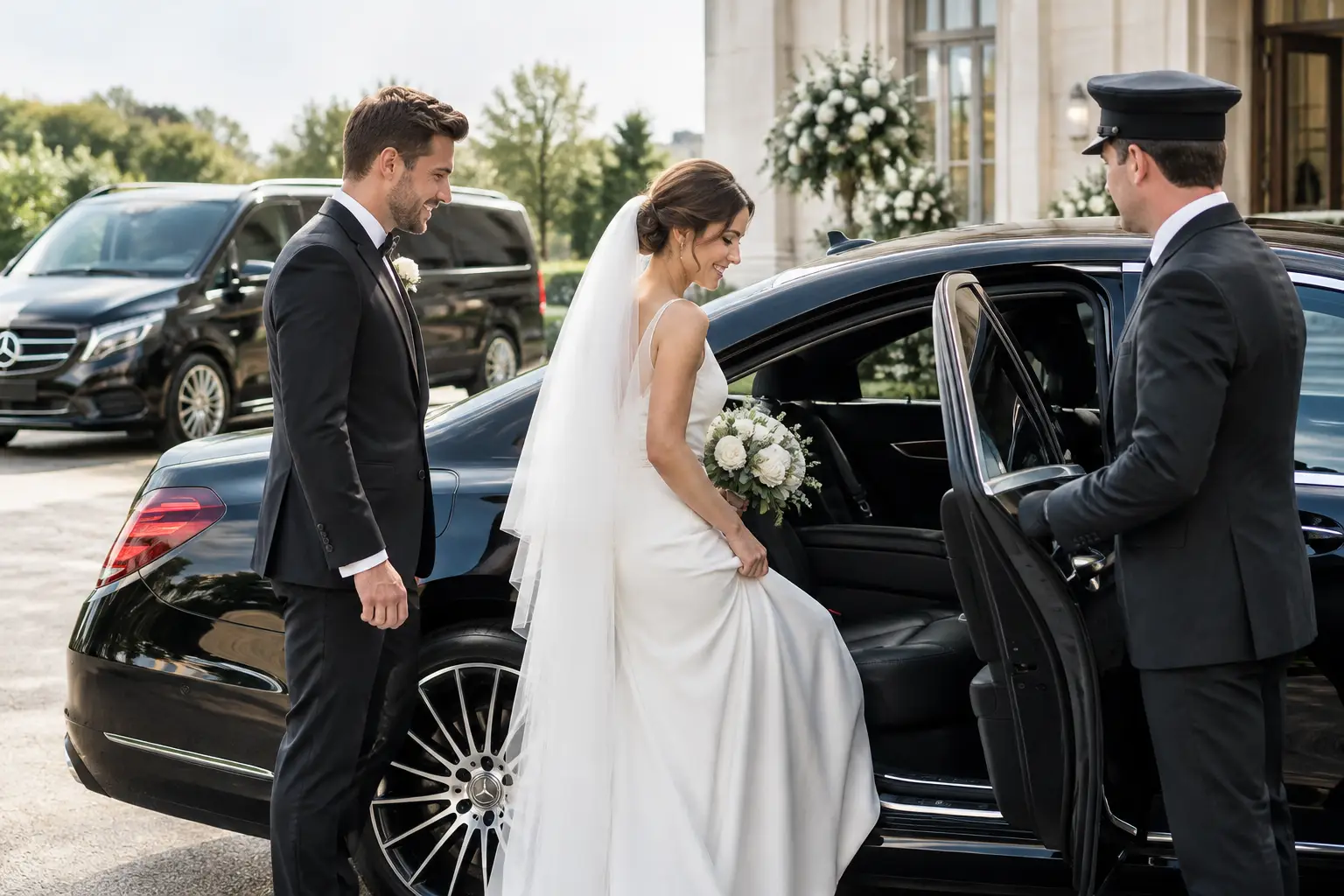
The wedding morning rarely runs to the minute. Hair appointments overrun, a buttonhole goes missing, someone leaves their phone at home and the photographer needs five more minutes. Wedding transport coordination gives the day a calm, reliable structure, so the people who matter arrive where they need to be without relying on last-minute lifts, parking luck or several separate taxi bookings.
For couples across Liverpool and the North West, it is not simply about choosing a smart vehicle. It is about planning the order of the day properly: who travels, when they need collecting, where they need to be dropped off and what happens once the celebrations finish. With a professional private-hire service, every journey has a clear plan, a named pickup point and a fixed fare agreed before the day.
Why wedding transport coordination matters
A wedding can involve more journeys than expected. There may be separate collections for the couple, parents, bridesmaids, groomsmen and younger guests. The ceremony and reception may be at different venues, while some relatives may be staying at a hotel or arriving at Lime Street station. Add photographs, evening guests and a late finish, and a simple lift can quickly become a logistical headache.
Coordination prevents one delay from becoming everyone else's problem. Rather than asking guests to make their own way, guessing how long local traffic will take or phoning for cars at the end of the night, transport is arranged around the schedule. Drivers receive the required details in advance, allowing the day to move with purpose while still leaving sensible time for real-life delays.
It also changes the experience for your guests. Older relatives, families with children and visitors unfamiliar with the area can travel door to door in comfort. No one has to nominate a driver, find a parking space near the venue or worry about getting home after celebrating.
Start with the journeys that cannot be late
The first priority is usually the journey to the ceremony. Work backwards from the time you need to be at the venue, not the advertised start time. Arriving 20 to 30 minutes early gives the wedding party breathing room for final photographs, a quick check of outfits and any unexpected hold-ups.
Your transport provider will need collection addresses, passenger numbers, venue postcodes and the preferred arrival time. It is also useful to flag narrow roads, difficult hotel entrances, country-lane venues and any access instructions. Small details shared early make a meaningful difference on the day.
The couple's journey deserves particular attention. Some prefer to travel separately before the ceremony, while others need a vehicle after the service to reach a photography location or reception venue. A Mercedes-Benz V Class can offer a comfortable, private space for up to seven passengers, which suits a small wedding party as well as family members travelling together. Luggage capacity matters too, especially where there are garment bags, overnight cases, gifts or children's essentials to carry.
Build in realistic timing
A tight itinerary may look efficient on paper, but weddings need contingency. Allow extra time for morning traffic, roadworks, weather, photographs and the simple fact that a group takes longer to get into a vehicle than one passenger. If the ceremony and reception are a short distance apart, do not assume the transfer itself is the only timing consideration. Guests need to leave, gather, board and get settled at the next venue.
A good rule is to identify the moments that have a fixed deadline, such as the ceremony, registrar appointment or evening venue access, then plan transport around those points. The rest of the schedule can retain a little flexibility without putting the whole day at risk.
Match vehicles to people, not just passenger numbers
Choosing wedding transport is not only a question of how many seats are available. Consider who is travelling and what they need. A parent with limited mobility may benefit from a direct collection and a short walk from the drop-off point. Bridesmaids may need space for dresses and bags. A group travelling from a hotel may value being together, rather than arriving in separate cars at different times.
For larger parties, coordinated multi-vehicle travel is often more practical than trying to fit everyone into one vehicle. It allows each group to have a clear collection time while keeping arrivals aligned. This works particularly well when the wedding party is getting ready at different addresses, or when guests are travelling between a city-centre hotel and a rural venue.
There is a trade-off. One larger vehicle can be sociable and straightforward, but it may require a longer route with several collections. Multiple vehicles offer flexibility, but need more careful timing. The right choice depends on your venue locations, the size of the party and whether everyone needs to arrive together.
Plan the guest journeys that make the biggest difference
You do not need to provide transport for every guest to make the day easier. Focus on the journeys where a pre-booked car removes real pressure. This could be collecting grandparents, bringing close family from the station, transferring guests between ceremony and reception venues, or taking a small group back to their hotel after the evening reception.
For destination weddings in the North West, station and airport transfers can be especially helpful. Guests arriving at Liverpool John Lennon Airport, Manchester Airport or a major rail station may be carrying luggage and unfamiliar with local routes. A pre-arranged driver means they have a direct, dependable start to the weekend rather than a queue, changing fares or uncertainty over availability.
For evening travel, agree the collection point clearly. Wedding venues can have several exits, busy car parks and poor mobile signal in some areas. A simple instruction, such as collecting from the main entrance at a set time, avoids guests wandering around at midnight trying to identify their car.
Keep one person in charge of the transport plan
On the day, the couple should not be fielding calls about pickups. Nominate one trusted contact, such as a member of the wedding party, venue coordinator or family member, to hold the final itinerary and deal with any minor changes. Give that person the transport provider's contact details and make sure they know who is travelling in each vehicle.
The plan does not need to be complicated. It should state collection addresses, times, passenger groups, venue entrances and return arrangements. If you are arranging several cars, label the groups by role rather than relying on names alone: bride and bridesmaids, groom and groomsmen, parents, or hotel guests. That makes the plan easy to follow even when somebody has a last-minute question.
Professional drivers should be licensed, insured and DBS checked, giving you confidence that the people carrying your family and friends are held to the standards the occasion deserves. For a wedding, personal service matters as much as punctuality. Drivers should understand that a small delay, a discreet helping hand with bags or a patient wait while guests gather can make the journey feel properly looked after.
Choose certainty over last-minute pricing
A wedding budget has enough moving parts without variable transport costs. Pre-booked fixed fares give you a clear figure to work with, whether you are arranging one special journey or a full programme of guest transfers. The quote is the fare, with no surge pricing because a ceremony ends at a busy time or the weather changes.
It is worth confirming what is included before booking: waiting time where required, multiple pickups, return travel, additional stops and late-night collections. Clarity at this stage prevents awkward decisions later, particularly if the schedule changes or guests need separate journeys home.
Oakmont Executive Travel can coordinate wedding journeys across Liverpool, the North West and mainland UK, with 24-hour private-hire support and comfortable executive travel for couples, families and groups. The focus is simple: professional drivers, carefully planned journeys and a transport schedule that supports your day rather than competing with it.
When you picture the final moments of the evening, think beyond the last dance. Knowing that your parents are safely on their way home, your guests have reached their hotel and you have a comfortable car waiting when you are ready to leave is a small detail that lets you enjoy the moment fully.