
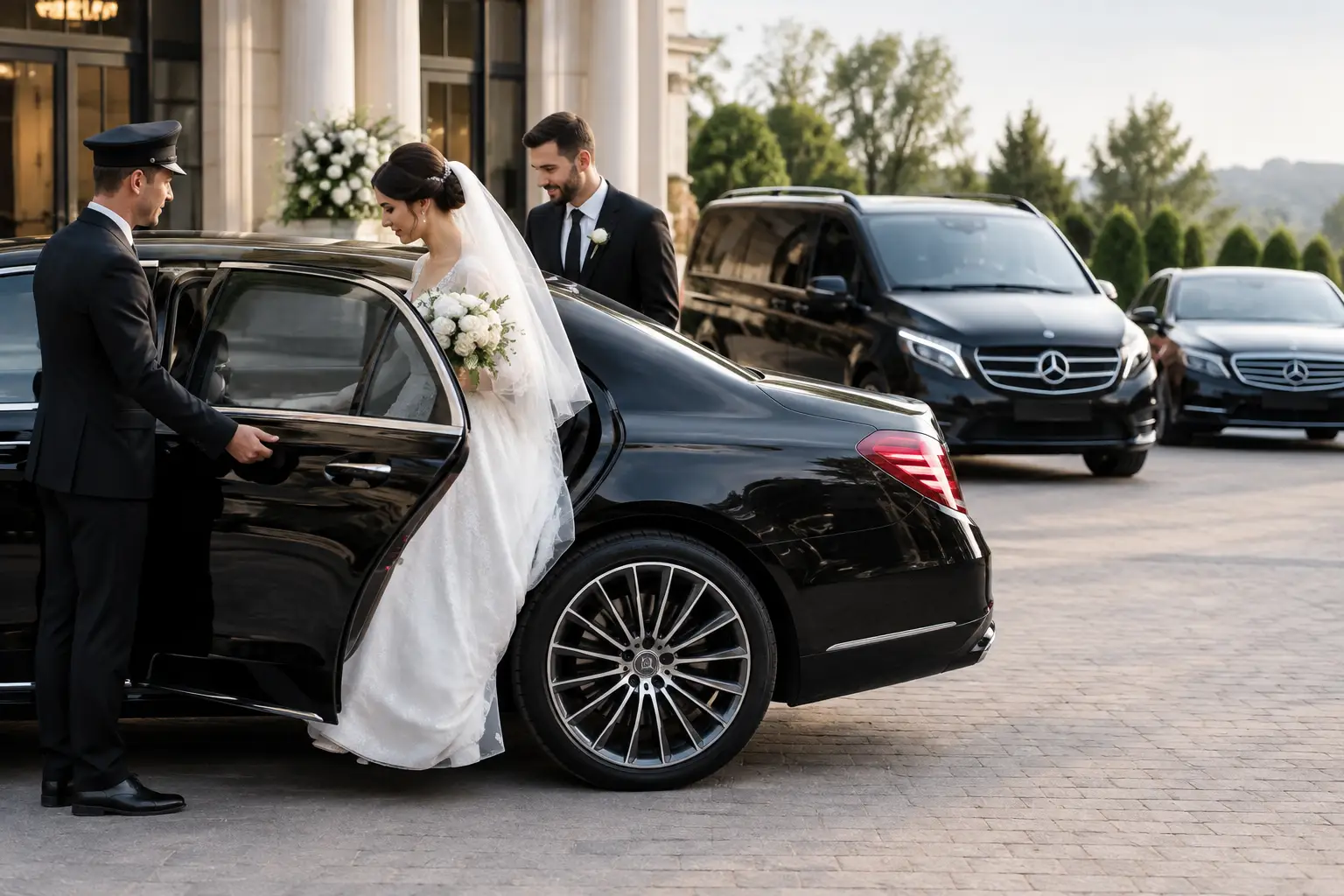
A wedding morning can run beautifully until one small delay starts to affect everything else. Hair appointments overrun, a buttonhole goes missing, the photographer needs five more minutes and suddenly the ceremony time feels much closer than it did on the invitation. To arrange wedding car timings properly, build the plan around real journeys, generous breathing room and the moments that matter most to you.
Your wedding transport should not be another moving part to chase. With a clear schedule, a professional driver and a vehicle suited to your party, you can leave home feeling composed and arrive ready for the day ahead.
Start with the ceremony time, then work backwards
The ceremony start time is the fixed point, but it should not be your arrival time. Aim for the wedding party to be at the venue 20 to 30 minutes before the ceremony begins. This gives you time for a final check, a quiet word with your registrar or celebrant, photographs at the entrance and a chance to settle before guests start looking for you.
From there, work backwards through each part of the journey. Include the driving time at the time of day you will actually travel, rather than relying on a map estimate checked late at night. Liverpool city centre traffic, school-run roads, roadworks, football fixtures and major events can all change a straightforward route.
Then add time for getting into the vehicle, gathering bouquets, helping older relatives, securing dresses and loading overnight bags. These details are easy to overlook, yet they are often where a carefully planned morning loses ten minutes.
A sensible example might look like this: for a 1pm ceremony, plan to arrive at 12.30pm. If the journey normally takes 25 minutes, allow 35 to 40 minutes for travel. If getting everyone from the house to the car could take 15 minutes, the collection time should be around 11.35am, not 12.15pm.
Arrange wedding car timings around people, not just places
A wedding car plan is rarely one journey. It may involve the couple travelling separately before the ceremony, parents travelling from another address, bridesmaids needing a larger vehicle and relatives requiring a lift after the reception. Map out who needs transport, from where and at what point in the day.
The person travelling furthest or with the tightest preparation schedule usually sets the first collection time. If one party is getting ready at a hotel while another is at home, do not assume both cars can leave at the same moment. Give each group its own realistic collection window.
For a larger wedding party, it can be better to book separate vehicles than to make repeated runs with one car. Multiple trips create a dependency on traffic being kind and everyone being ready precisely on time. A coordinated multi-vehicle plan costs more than trying to stretch one vehicle, but it protects the timetable and reduces pressure on the morning.
Vehicle choice matters here too. A Mercedes-Benz V Class can comfortably carry up to seven passengers, making it a practical choice for parents, bridesmaids or family members travelling together. Consider luggage space as well if people are bringing bags for the hotel, reception décor or a change of clothes.
Leave room for the unexpected
The best wedding timetable has contingency built into it. Add at least 15 minutes to each key journey, and more where the route is long, unfamiliar or likely to be busy. For city-centre venues, race days, concerts or match days, a 30-minute buffer may be the wiser choice.
This is not about expecting things to go wrong. It is about giving yourselves the freedom to enjoy the morning if something small happens. A late delivery or a last-minute wardrobe adjustment should not mean arriving flustered at your own ceremony.
Share the final timings with the people who need them, but avoid turning every guest into a transport coordinator. The couple, wedding planner, venue contact and nominated family member should each have a simple version of the schedule, including collection addresses, passenger numbers and driver contact arrangements.
Plan the post-ceremony journey carefully
The journey after the ceremony often appears simple on paper: travel from the ceremony venue to the reception. In reality, it depends on your photography plans and whether you want time alone as a newly married couple.
If photographs are taking place at a separate location, allow for getting guests out of the venue, greeting family, confetti and any formal group shots before the vehicle leaves. A 2pm ceremony finishing at 2.30pm does not necessarily mean you will be ready to travel at 2.35pm. An hour or more may be realistic, particularly if the photographer has a planned shot list.
Some couples prefer to travel directly to the reception before guests arrive. Others want guests to reach the venue first so they can be welcomed before the newlyweds make an entrance. Neither approach is right for every wedding, but the choice should be made early because it affects the vehicle schedule and the time booked.
If you are using your wedding car for photographs, tell the transport provider in advance. The driver can allow for waiting time and position the vehicle where it is useful, subject to venue access and safe parking. Assuming a car will be available for an extra hour can lead to avoidable disappointment if it has another commitment.
Do not overlook evening and guest transport
Transport requirements often change after dinner. Elderly relatives may need to leave before the evening reception begins, guests staying in nearby hotels may need a pre-arranged return journey, and the newlyweds may be heading to an airport, rail station or hotel once the celebrations finish.
A late-night collection is worth booking in advance, especially when the reception is in a rural venue or finishes after public transport has reduced. It gives guests a dependable route home and avoids asking someone to drive after celebrating.
For guests travelling in groups, agree collection points rather than making several separate stops where possible. One hotel entrance or a clearly named venue gate keeps the evening running more smoothly. It also makes a fixed-price quotation easier to provide, with no uncertainty around surge pricing or hidden extras.
Give your chauffeur the details that make a difference
A professional driver can only deliver a well-managed service with accurate information. Confirm full collection and drop-off addresses, passenger numbers, contact numbers and any access instructions. Let them know if a venue has a one-way system, restricted entrance, narrow lane or a specific collection point.
It is also helpful to flag mobility needs, large dresses, child seats, lots of luggage or passengers who may need extra time getting in and out. These are not awkward requests. They are the details that allow the right vehicle and journey plan to be put in place.
At Oakmont Executive Travel, wedding journeys are treated as managed occasions rather than ordinary taxi bookings. A pre-booked, fixed-fare service means the quote is the fare, while licensed, DBS-checked drivers and insured vehicles provide reassurance from the first collection to the final journey home.
Keep the final plan simple
A few days before the wedding, review the timetable once more with your transport provider. Check the ceremony time, addresses, passenger list, contact person and any changed photography plans. Avoid constantly adjusting the plan the night before unless something genuinely needs to change.
On the day, aim to be ready before the car arrives rather than using the arrival time as the signal to start getting ready. That one habit turns your transport from a deadline into a calm pause between one part of the day and the next.
The right wedding car timings give you something more valuable than punctuality: the space to look around, take it in and begin the day exactly as you hoped.